The Role Of Virtual Cards In The Cashless Economy - Foundation Of Digital Finance
The Unseen Infrastructure: The Role Of Virtual Cards In The Cashless Economy
The move toward a cashless economy is one of the most significant financial revolutions of our time. It promises a world of seamless transactions, reduced theft, and greater economic efficiency. But this revolution hinges on a single, critical factor: trust. To replace the tangible security of physical cash, we need a digital equivalent that is equally reliable, secure, and accessible.
This is where virtual cards come into play, not just as a payment option, but as a foundational piece of infrastructure. While digital wallets and mobile payments often grab the headlines, the virtual card operates quietly as the essential connective tissue. It is the technology that bridges the gap between traditional banking and the demands of a digital-first world.
By providing a flexible, secure, and intelligent payment instrument, virtual cards are doing more than just facilitating transactions; they are fundamentally reshaping the entire architecture of the modern financial system, enabling a cashless future that is both safer and more resilient.
Key Takeaways
- Virtual cards are infrastructure: They are not just a payment method but a foundational technology enabling secure, scalable digital payments in a cashless economy.
- They are the ultimate fraud defense: By using disposable and merchant-locked card numbers, virtual cards stop fraud at the source, a critical function in a digital-first world with no physical cash to fall back on.
- Virtual cards drive financial inclusion: They provide a path for the unbanked to participate in the digital economy without needing a physical card or a traditional credit history.
- They empower businesses: For companies, virtual cards streamline expense management, secure B2B payments, and combat fraud, which is crucial for operational efficiency in a cashless system.
- They are the future of payments: Their versatility and security make them a key technology for emerging trends like the subscription economy, open banking, and the metaverse.
The Cashless Economy’s Core Challenge: Securing The Digital Frontier

The promise of a cashless economy is enormous, but its primary obstacle is vulnerability. As we move away from physical currency, every transaction becomes a data point, and every account becomes a potential target for cybercriminals. A widespread data breach could have catastrophic consequences in a world where there is no cash to fall back on.
This is the central problem that virtual cards are purpose-built to solve. They provide a robust and scalable defense mechanism that is uniquely suited to the challenges of a digital-first system. By using temporary, random payment tokens, they eliminate the single point of failure that is a permanent, static card number, making large-scale fraud far more difficult to execute.
The Transformative Impact Of Virtual Cards On Cashless Adoption
Virtual cards are not merely an alternative payment method; they are a fundamental driver of the cashless economy, enhancing security, providing unparalleled convenience, and optimizing financial operations in ways that accelerate the shift away from physical currency.
Enhanced Security And Fraud Prevention Through Virtual Cards
Virtual cards are engineered with inherent security features that significantly mitigate fraud risks, establishing them as a cornerstone for secure digital transactions in a cashless environment.
- Dynamic Card Details: Unlike traditional cards, virtual cards generate unique details, including card numbers and expiration dates, for each transaction or vendor relationship. This means that even if the card information is intercepted, it becomes worthless to fraudsters once the specific transaction is completed or the card expires. This drastically reduces the exposure of sensitive financial data, a critical improvement over static card numbers.
- Tokenization: Where sensitive payment information is replaced with encrypted tokens. These tokens are useless without the corresponding tokenization system, thereby significantly reducing the risk of phishing attacks, skimming devices, and minimizing the impact of potential data breaches. This demonstrates that the security features of virtual cards are not merely enhancements but fundamental design principles. This proactive approach to security, built into the very nature of the virtual card, contrasts sharply with traditional methods, where security is often added as a layer to a static credential. This inherent security builds a stronger foundation for digital trust.
- Granular Control for Fraud Containment: Users can set precise spending limits for individual purchases, daily activities, or monthly budgets, providing enhanced control over their financial transactions. This feature ensures that even if a virtual card is compromised, potential fraud losses are contained to a predetermined, minimal amount.
- Merchant restrictions: This allows virtual cards to be configured to work only with specific merchants, creating a protective barrier. If one merchant's system is breached, other payment systems remain secure, as only the affected virtual card needs to be canceled. While tokenization and dynamic numbers are technological safeguards, features like customizable spending limits and merchant restrictions empower users (both individuals and businesses) to actively participate in their fraud prevention. This combination of advanced technology and user-configurable controls creates a more robust defense against fraud, leveraging both systemic protection and informed user action.
- Real-time monitoring and rapid response: The systems supporting virtual cards enable real-time monitoring and rapid response. Transactions are tracked in real-time, enabling the immediate identification of suspicious activity through automated alerts. This capability enables instant freezing or cancellation of a compromised card, limiting damage and ensuring uninterrupted payment operations.
- Elimination of physical vulnerabilities: The absence of a physical card removes common fraud touchpoints such as physical theft, loss, or skimming, which are prevalent risks with traditional cards. The success of virtual cards in fraud prevention sets a new benchmark for digital payment security, which will likely drive demand for similar proactive security designs across the broader fintech landscape, pushing the cashless economytowards more inherently secure transaction models.
Unparalleled Convenience And Operational Efficiency
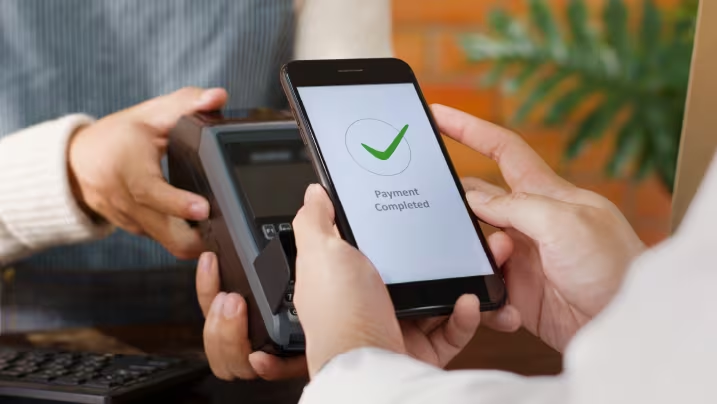
Virtual cards significantly enhance convenience for both consumers and businesses, while simultaneously driving operational efficiencies that accelerate the shift away from cash.
- Instant access: For consumer convenience, virtual cards offer instant access. They can be created in seconds, ready for immediate use, eliminating the need to wait for a physical card to be mailed. This directly meets rising consumer expectations for speed and instantaneity in their financial interactions.
- Ease of Use: For online or phone purchases, virtual cards remove the necessity of having a physical card on hand, as all details are readily accessible via an app or website. Many providers further streamline the process with browser extensionsor mobile apps that can even auto-fill payment details at checkout.
- Simplified Management: A single, centralized dashboard allows users to manage multiple virtual cards, track spending, and instantly lock or cancel cards as needed. This is particularly useful for managing various online subscriptions, providing a clear overview and control over recurring payments.
- Business Operational Efficiency: In terms of business operational efficiency, virtual card programs, especially when integrated with Enterprise Resource Planning (ERP) and Accounts Payable (AP) systems, lead to streamlined AP processes. They automate payment workflows, drastically reducing the manual effort involved in traditional payment methods like checks. This translates into faster processing times and reduced administrative overhead.
- Automated Data Capture and Reconciliation: Detailed transaction data from virtual cards automatically feeds into accounting systems, linking payments directly to invoices or purchase orders. This significantly simplifies and speeds up reconciliation, minimizing human errors.
Optimizing Working Capital And Expense Management For Businesses
Beyond basic payment functionality, virtual cards offer sophisticated tools that significantly enhance a business's working capital management and expense control, further solidifying their role in a cashless corporate environment.
- Improved working capital management: Virtual cards contribute to improved working capital management by enabling businesses to manage their cash flow more effectively. When a business uses a virtual credit card, it pays the issuing bank according to the card's terms, rather than immediately on the invoice date. This allows businesses to preserve their working capital for longer periods, freeing up cash for other strategic investments or operational needs.
- Reaching tail-end suppliers: Smaller vendors who may not typically adopt more complex supply chain finance or dynamic discounting programs. By providing a familiar and accessible payment method, virtual cards ensure that a business can optimize its cash flow across its entire supplier network, not just with its largest partners.
- Cost reduction and potential revenue generation: Virtual cards can result in significant cost reductions by eliminating the need for paper checks and their associated processing fees. Moreover, some virtual card programs offer cash-back rebates on spend, which can generate additional revenue for the organization, further enhancing financial benefits.
- Automated reconciliation and data integration: Virtual card transactions automatically feed into accounting and ERP systems, streamlining bookkeeping and reconciliation processes. This integration provides valuable information for accounting, travel, and expense monitoring, and procurement, significantly reducing manual burdens and improving data accuracy.
Use Cases And Programs For The Unbanked And Underbanked
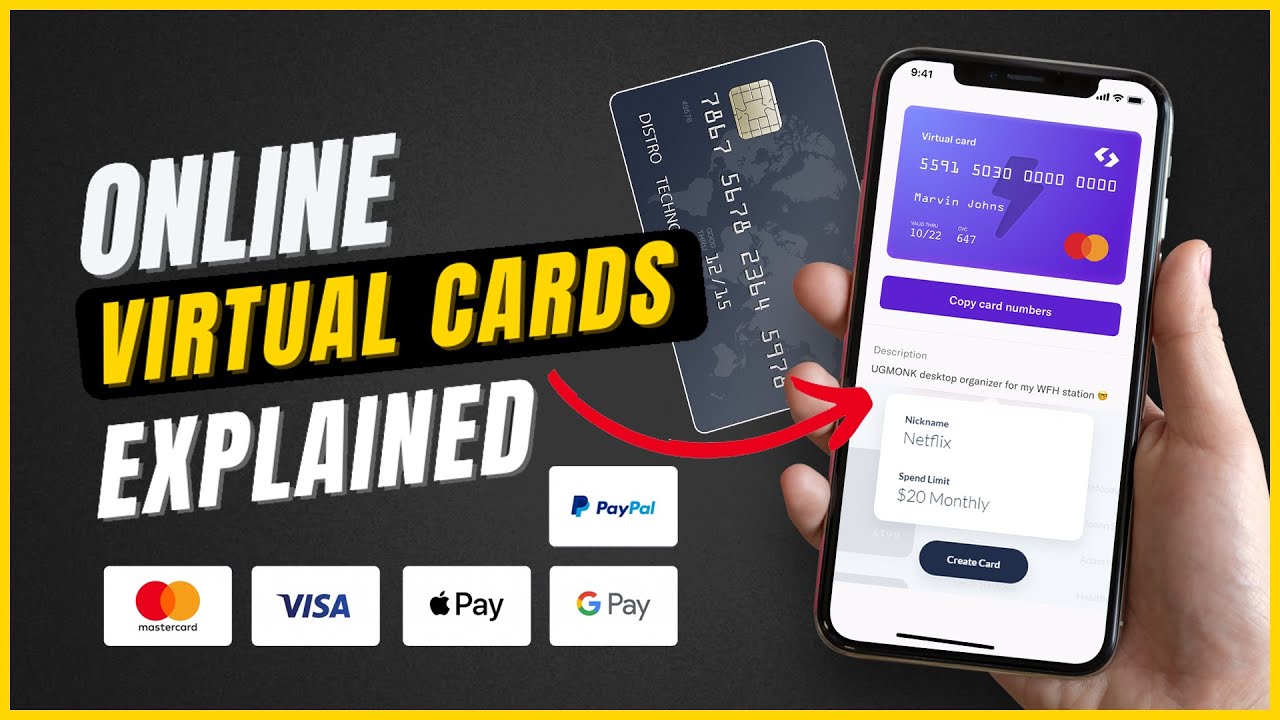
HOW DOES A VIRTUAL CREDIT CARD WORK? | VIRTUAL CREDIT CARD EXPLAINED
Virtual cards and other digital payment instruments are being used in a variety of programs to address the needs of unbanked and underserved communities. These initiatives focus on providing a secure and accessible alternative to traditional banking.
- Government Disbursements and Social Welfare Programs: Government agencies use prepaid cards, which often have virtual card features, to distribute benefits like unemployment payments and social security. Examples include Tyler's Disbursements software and Mastercard's Community Pass, which helps digitize financial records for farmers and healthcare records for vaccine delivery. These programs help recipients avoid check-cashing fees and provide immediate, secure access to funds.
- Facilitating Basic Financial Tasks: For households without bank accounts, prepaid cards, and nonbank payment apps with virtual card capabilities act as a substitute for traditional banking services. This allows them to pay bills, receive income, and make both online and in-person purchases.
- Fintech-driven Initiatives: Fintech companies are collaborating with global payment networks like Visa to offer essential financial services to underserved populations, such as immigrants. This partnership model combines government distribution with innovative technology to expand financial inclusion.
- Mobile-first Solutions: Digital wallets that can host virtual cards are crucial for the unbanked and underbanked. These solutions provide access to financial services without needing a traditional bank account. The key benefit for this group is not the card type itself, but the practical functionality of secure digital access and control. This suggests that the future of virtual cards in financial inclusion lies in their integration into broader digital financial services platforms.
Virtual Card Security Features Vs. Traditional Methods
- Card Number Usage: Virtual cards enhance security by using dynamic, unique card numbers for each transaction or vendor, in contrast to the single, static number used repeatedly on traditional cards.
- Data Exposure: Virtual cards utilize tokenization to protect sensitive account details from merchants, while traditional cards directly expose the primary account number during transactions.
- Fraud Containment: Virtual cards offer a higher degree of control for fraud containment through granular spending limits and merchant-specific restrictions, a feature that is limited by the general limits on traditional cards.
- Response to Compromise: In the event of a compromise, a virtual card can be instantly locked, canceled, and replaced. A traditional card, however, requires a delayed process of reporting, physical cancellation, and waiting for a new card to be issued.
- Physical Presence and Monitoring: The absence of a physical card eliminates risks like theft and skimming. Additionally, virtual cards provide immediate, real-time transaction monitoring and alerts, a significant improvement over the often-delayed monitoring of traditional methods, such as monthly statements.
See Also: Top Virtual Card Providers For 2024 - Secure Your Online Transactions
Challenges And Considerations For Widespread Virtual Card Adoption
Virtual cards face several significant challenges to widespread adoption, including technical, financial, socioeconomic, and systemic issues.
Technical, Financial, And Socioeconomic Barriers
- Digital Divide and Financial Exclusion: The necessary infrastructure for virtual cards, such as smartphones and reliable internet, isn't available to everyone. This creates a digital divide that can exclude elderly individuals, low-income communities, and rural populations from a cashless economy.
- Infrastructure Development: Widespread adoption requires robust infrastructure, including reliable internet, efficient payment networks, and extensive digital point-of-sale systems. Without these, the seamless use of virtual cards is compromised.
- Technical and Operational Challenges: Users may encounter technical issues like server problems or dropped connections, which can undermine trust in digital payments. Businesses also face challenges with integrating virtual card programs into their existing systems.
- Financial Barriers: Convenience fees and other transaction fees can deter users, especially those with low incomes. While virtual prepaid cards avoid overdraft fees, they may have other charges that disproportionately affect vulnerable individuals.
- Socioeconomic Factors and Behavioral Adoption: A person's willingness to adopt new payment methods is influenced by their perceptions of speed, ease of use, and trust. Furthermore, practical issues like complications with returns on expired single-use cards can impact user experience and adoption.
Privacy, Cybersecurity, And Systemic Risks
- Privacy Concerns: A cashless society creates a comprehensive digital record of every transaction, eliminating the anonymity of cash. This raises significant concerns about surveillance and the potential misuse of consumer data by governments and corporations.
- Amplified Cybersecurity Threats: A fully digital payment system is a larger target for cybercriminals. This increases the risk of hacking, identity theft, ransomware attacks, and data breaches. While virtual cards mitigate card-specific fraud, the overall digital ecosystem becomes more vulnerable.
- Systemic Risks: An economy entirely dependent on digital payments is susceptible to large-scale technical failures or power outages. This could leave people unable to access their money. Central banks also face questions about the stability of the payment system, the effectiveness of monetary policy, and the implications of a cashless society on traditional financial functions.
The Future Landscape: Evolution Of Virtual Cards In A Cardless Society

- Digital Wallets: These are already a key platform for virtual cards, offering instant access and seamless payment integration. They're evolving into comprehensive financial tools that consolidate various functions, promoting wider adoption.
- Artificial Intelligence (AI) and Generative AI (GenAI): AI is being used to analyze spending, provide personalized financial insights, and strengthen fraud prevention algorithms, making digital transactions more secure.
- Blockchain and Digital Currencies: Technologies like blockchain and cryptocurrencies are gaining popularity for their high security and low transaction costs, especially for cross-border payments. The combination of these technologies is seen as an enabler for a truly "cardless and cashless society."
- Biometrics and Digital Identities: A key innovation is the move toward associating payments directly with a person's biometrics (like fingerprints or retina scans) and digital identity. This moves beyond traditional card numbers, suggesting a future where the "card" itself becomes obsolete in favor of identity-based authentication.
- Augmented Reality (AR) and Metaverse Integration: Future payment experiences could be revolutionized by AR, allowing users to make purchases in virtual environments without needing to manually enter card details, with payments linked to their digital identity or a user ID.
Related: Travel Smart - Best Virtual Credit Cards For Travel In <year>
Trends Towards A More Integrated And Secure Digital Payment Ecosystem
The evolution of virtual cards is leading to a digital payment ecosystem that is more integrated, secure, and personalized.
- Payment Tools: Driven by consumer demand for speed and security, payment methods are continuously evolving. As digital-first payments become more common, the gap between physical and virtual cards will continue to grow.
- Enhanced Security: Security is constantly improving through new regulations, like PSD3, and technological advancements. While digital fraud may increase, the shift away from physical cash will likely reduce physical fraud, and advanced prevention methods will make the overall system safer.
- Personalization: The rise of mobile payments has increased consumer expectations for personalized experiences. AI will further enable this by providing customized recommendations and making financial interactions more intuitive.
- Frictionless and Efficient Experiences: Technologies such as Near Field Communication (NFC) and QR codes are making payments more convenient and less physical. This points to a future where payments are "invisible" or embedded within the transaction, with authorization handled through a verified digital identity rather than a card number.
- Multi-functional Platforms: Mobile wallets are becoming comprehensive financial platforms, consolidating various functions and driving further adoption. Businesses that embrace these technologies will be better positioned to succeed in the digital-first future.
Virtual Card Contributions To Financial Inclusion

Virtual Cards EXPLAINED: Get a FREE Instant Debit Card from REVOLUT!
- Addressing Lack of Bank Accounts: Virtual prepaid cards and nonbank payment apps provide a pathway for individuals to engage in digital transactions without needing a traditional bank account.
- Enhancing Security: These digital solutions reduce security risks associated with physical cash. Features like dynamic card details, tokenization, and the ability to instantly lock a compromised card offer a safer alternative to carrying cash, which is vulnerable to theft and loss.
- Expanding Access to Credit and Services: By creating a digital identity (like through Mastercard's Community Pass or Farm Pass) and facilitating government disbursements, virtual cards help individuals build a financial history. This, in turn, can open doors to formal credit, loans, and other financial services that were previously out of reach.
- Overcoming Geographic Barriers: Mobile-first platforms are particularly effective in geographically isolated areas or places with poor infrastructure, enabling people to access and manage financial services from their mobile devices.
- Simplifying Adoption: Simplified user interfaces and education initiatives help build trust and digital literacy, making it easier for individuals unfamiliar with technology to adopt and use these payment methods.
- Lowering Transaction Costs: Virtual cards and digital services often have lower fees compared to traditional banking, helping low-income individuals avoid costly check-cashing fees and other high-cost financial services.
Frequently Asked Questions
Are Virtual Cards Only For Online Shopping?
No. While they are most commonly used for online purchases, their use is expanding. With the integration of virtual cards into digital wallets, they can also be used for in-store payments via tap-to-pay.
How Do Virtual Cards Help With Financial Inclusion?
Virtual cards enable individuals to participate in the digital economy without requiring a physical card or a traditional credit history. They can be linked to mobile money accounts or prepaid services, making digital payments accessible to a wider population.
Can A Cashless Economy Be Secure Without Virtual Cards?
A cashless economy could exist without virtual cards, but it would be far less secure. The lack of a disposable, single-use payment instrument would leave the system highly vulnerable to large-scale data breaches and fraud, making consumer trust a major challenge.
What Are The Main Differences Between A Virtual Card And A Digital Wallet In A Cashless Economy?
A virtual card is the secure payment instrument itself (the number), while a digital wallet is the platform that holds and manages that instrument. In a cashless world, they work together to provide both security and convenience.
Do Virtual Cards Work With Any Merchant?
Yes, virtual cards work anywhere that a traditional credit card from the same network (e.g., Visa, Mastercard) is accepted.
How Do Businesses Use Virtual Cards For B2B Payments?
Businesses use virtual cards to pay vendors and suppliers. They can generate a unique card for each invoice with a specific spending limit, which provides better security, a clear audit trail, and easier reconciliation than traditional checks or wire transfers.
What Is The Biggest Risk Of A Cashless Economy?
The biggest risks include the potential for widespread system failure, loss of financial privacy, and the exclusion of people who lack access to technology or the economic infrastructure to participate.
How Do Virtual Cards Benefit Governments?
Governments benefit from a cashless economy through reduced costs of handling physical currency, more efficient tax collection due to a clear digital record of transactions, and a more resilient financial system.
Final Thoughts
The cashless economy is no longer a distant vision; it's a rapidly unfolding reality. The success of this transition, however, will not be measured by the speed of adoption, but by its security and inclusivity. In this context, virtual cards are much more than a clever fintech innovation; they are the invisible foundation upon which a reliable digital financial system is being built.
By giving us a powerful tool to manage risk, empower individuals, and streamline business operations, virtual cards are helping us bridge the trust gap inherent in a digital-first world. They are the essential security layer that allows us to move forward with confidence, ensuring that the future of finance is not just cashless, but also safer, smarter, and more accessible for everyone.
You Might Like: The Rise Of Interactive Digital Entertainment