How Virtual Cards Enhance Online Shopping Security - A New Era Of Digital Financial Control
Your Digital Shield: How Virtual Cards Enhance Online Shopping Security
The convenience of online shopping is undeniable, but it comes with a nagging sense of unease. With every purchase, you hand over your personal credit card information, a permanent set of numbers that, if stolen, could lead to a financial nightmare. This fear isn't just paranoia; data breaches and online fraud are a constant threat. The question isn't if a website will be hacked, but when.
But what if you could shop online without ever exposing your real credit card number? This is the core promise of virtual cards. They are not just another payment method; they are a fundamental shift in how you protect yourself in the digital world.
By providing a temporary, disposable, or merchant-locked proxy for your real card, virtual cards offer a powerful and practical solution to a pervasive problem, giving you an unprecedented level of security and peace of mind with every click.
Key Takeaways
- Virtual cards are a disposable shield: They are temporary, randomly generated card numbers that are linked to your real credit card but never expose its details.
- They stop fraud before it starts: Since the actual card number is never shared with a merchant, a data breach on their end cannot compromise your primary financial account.
- Control is the ultimate security feature: Virtual cards give you control over spending limits, duration, and even the merchants that can use them.
- Virtual cards are easy to use: They are often integrated directly into your bank's app or a third-party fintech service, making them as convenient as a regular card.
- They protect more than just your money: By limiting your digital footprint, virtual cards protect your identity and provide peace of mind in an insecure online landscape.
The Fundamental Problem With Traditional Cards
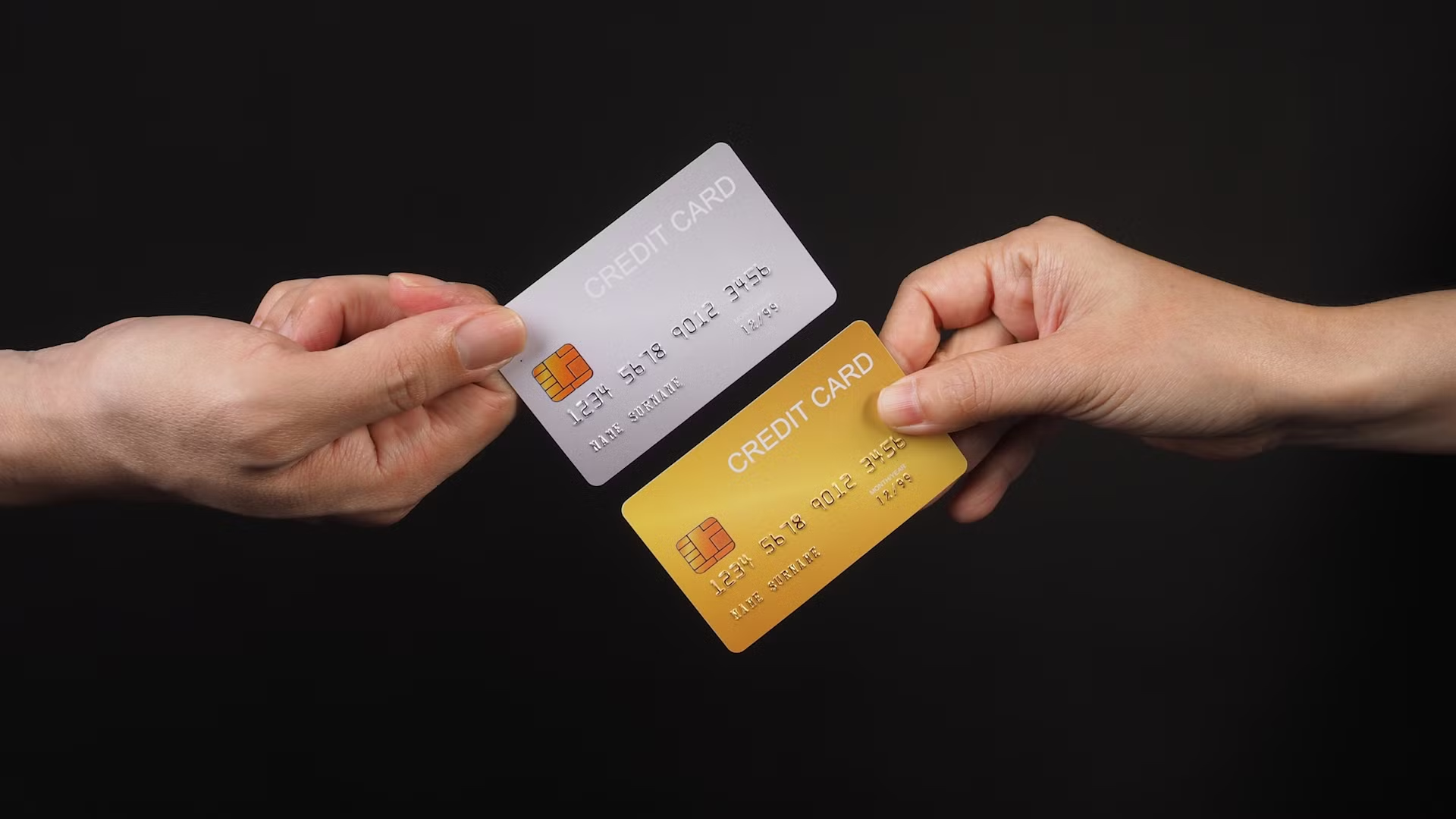
Before we can appreciate the power of a virtual card, we must understand the core vulnerability of a traditional credit or debit card. When you enter your card number, expiration date, and CVV on a website, you are essentially giving a merchant a permanent key to your account. This single, static piece of information is then stored in their database.
This is a problem because if that merchant's database is ever breached, a common occurrence today, your card information becomes a valuable target for cybercriminals. Once stolen, your card number can be used to make fraudulent purchases on completely different websites, potentially leading to financial loss and a headache of canceling cards, filing disputes, and monitoring your credit.
How Virtual Cards Enhance Online Shopping Security: A Deeper Look
Virtual cards solve this problem by introducing a layer of abstraction. They are not a separate account; they are a randomly generated, unique card number linked to your existing credit or debit account. The virtual card number has no permanent value and serves as a temporary proxy, protecting your real card from exposure.
This is not a simple password; it's a completely different approach to digital payments. The security benefits stem from the core features of these cards.
1. The Disposable Shield: Single-Use And Time-Sensitive Cards
The most potent feature of many virtual cards is their disposability. You can generate a virtual card number for a single transaction. Once the purchase is complete, that card number becomes useless.
Even if a cybercriminal were to steal it from the merchant's database, they would have a worthless string of numbers with no value. This makes it impossible for them to make a fraudulent purchase elsewhere.
For added convenience, you can also generate cards that are valid for a specific period, such as one week or one month. This is perfect for short-term online subscriptions or free trials that you might forget to cancel.
2. The Merchant-Locked Guard: A Failsafe Against Misuse
Another powerful feature is the ability to lock a virtual card to a specific merchant. When you generate a virtual card for your Netflix subscription, for example, you can configure it so that it can onlybe used on Netflix's website.
If that card number were to be stolen and used on another site like Amazon, the transaction would be automatically declined. This merchant-locking capability provides a crucial layer of defense, ensuring that even if your card information is compromised, the damage is contained to the single, trusted merchant it was intended for.
3. Control And Peace Of Mind: Setting Spending Limits
Virtual cards also give you a level of financial control that a traditional card cannot. When you generate a virtual card, you can set a specific spending limit. If you want to buy a pair of shoes for $150, you can create a card with a $155 limit. If a fraudulent attempt is made for a higher amount, the transaction will be declined, and your real account will remain safe.
This is a game-changer for subscriptions, where you can set a card to have a monthly limit that matches your subscription cost, preventing a merchant from unexpectedly raising their prices or charging you for an unwanted service.
4. Tokenization Technology
Virtual cards leverage advanced tokenization technology, which replaces sensitive payment data with randomly generated tokens that have no inherent value. Even if criminals intercept these tokens during transmission, they cannot decipher or use them to access your actual account information. This process ensures that your real card details never leave the secure environment of your financial institution.
5. Real-Time Transaction Monitoring
Modern virtual card platforms provide instant transaction alerts and real-time monitoring capabilities. This allows users to immediately detect and respond to suspicious activity, often freezing or canceling compromised cards within minutes rather than waiting for monthly statements.
A Real-World Scenario: Virtual Cards In Action

How Do Virtual Cards Work? | Virtual Credit Card Explained 2026
Imagine you're buying a product from a new, small-scale online store you've never used before. The price is right, but you feel a nagging doubt about trusting them with your primary credit card information. Without a virtual card, you'd have to use your real credit card number, a permanent piece of data that now exists in their database.
If that site is ever hacked, your card could be stolen, leading to potential fraudulent charges on other sites. You would then have to go through the hassle of canceling your card and getting a new one. With a virtual card, you generate a single-use card number with a specific spending limit just for that purchase.
You enter that temporary number into the payment form. The purchase goes through, and the virtual card number is immediately deactivated. If that website is ever breached, the stolen card number is completely worthless. Your real credit card number was never exposed, and you can shop with confidence, knowing you're protected.
Comparison With Traditional Payment Methods: A Fundamental Shift
The security of virtual cards is best understood when placed side-by-side with the traditional payment methods we've used for decades. Physical cards were designed for an era of in-person, card-present transactions. Virtual cards, on the other hand, are a purpose-built solution for the digital landscape, where the risks are fundamentally different. The table below provides a quick overview, but the true value lies in understanding the "why" behind each point.
Fraud Exposure: A Single Key Vs. A Master Key
The most glaring difference is how each card handles fraud exposure. When you shop online with a physical credit card, you are using the same 16-digit number, security code, and expiration date every single time. This is akin to giving every merchant you interact with a master key to your front door. If one of those keys is stolen, a criminal can use it to enter anywhere.
Virtual cards, however, operate on the principle of a unique, single-use key. They generate a new, random card number for each transaction or for a specific merchant. If this number is ever stolen, it is a key that only works once, or only for that specific merchant, rendering it useless for any other fraudulent activity. This proactive approach stops fraud attempts dead in their tracks before they ever reach your primary account.
Data Breach Risk: A Temporary Ghost Vs. A Permanent Identity
The risk of a data breach is a modern reality. Every time a physical card number is stored in an online merchant's database, it becomes a permanent target. If that database is compromised, your static card data is exposed and can be sold on the dark web, where it can be used for years until the card expires or is canceled.
Virtual cards mitigate this risk almost entirely. Since they are based on temporary, disposable tokens, the sensitive account information they represent is never stored in the merchant's database. Even if a merchant's system is breached, the data stolen is a worthless string of numbers that cannot be linked back to your real credit card.
Recovery Time: Immediate Resolution Vs. Days Of Stress
In the event of fraud, the practical difference in recovery time is immense. If your physical card number is stolen, you must call your bank, report the fraudulent charges, and wait days or even weeks for a new card to be issued and mailed to you. During this time, your ability to make online or in-store purchases is completely halted.
With a virtual card, the recovery is instantaneous. If you spot a fraudulent transaction, you can immediately log into your virtual card provider and deactivate the compromised number with a single click. Your primary card remains active, and you can instantly generate a new virtual card number to continue making purchases without any interruption.
Spending Control: Active Management Vs. Passive Monitoring
Physical cards offer passive control; you can only monitor your transactions and spending afterthey have occurred. The only limit you have is your card's overall credit limit. Virtual cards, by contrast, offer a level of active, granular control that is impossible with traditional methods. You can set a specific spending limit for a single transaction, a merchant, or a period, giving you complete power over where and how your money is spent. This feature is not just for security; it's a powerful tool for personal budgeting and financial discipline.
Loss/Theft Risk: A Digital Asset Vs. A Physical Object
Finally, the most obvious distinction is the physical vulnerability. A physical card can be lost, stolen from a wallet, or compromised through skimming at an ATM or a point-of-sale terminal. This creates a significant real-world risk that virtual cards are completely immune to. Because they exist solely in the digital realm, they cannot be physically stolen, providing a peace of mind that a plastic card simply cannot.
See Also: Virtual Cards Vs. Traditional Payment Methods For Your Needs
How To Get And Use Virtual Cards
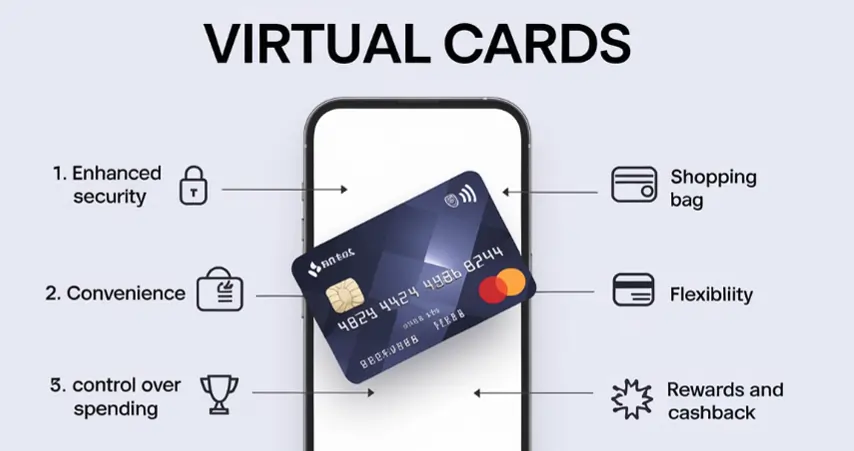
The process of getting and using a virtual card is surprisingly simple and convenient.
- Check with Your Bank: Many major banks now offer virtual card services directly through their mobile banking apps. This is the most common way to get started.
- Explore Fintech Apps: Companies like Privacy.com and Revolut are built specifically around virtual card services. They connect to your existing bank account and allow you to generate multiple cards with a variety of customizable security features.
- Learn the Interface: Once you have access, you'll be able to create new virtual cards with a few taps. You can typically customize them with a name (e.g., "Amazon Card," "Netflix Subscription"), a spending limit, and an expiration date.
- Shop Securely: When you're ready to make an online purchase, simply copy the virtual card number from your app and paste it into the payment form, just as you would with a physical card.
It’s that easy. You get the convenience of a credit card without the inherent risk of exposing your primary financial information.
Fraud Prevention Benefits
Reduced Data Breach Impact
When merchants experience data breaches, virtual cards significantly limit the damage. Since the stolen information consists only of temporary, merchant-specific card numbers rather than your primary account details, criminals cannot use this data for transactions elsewhere.
Enhanced Authentication
Virtual cards often incorporate additional authentication layers, including two-factor authentication and biometric verification. These security measures make it substantially more difficult for unauthorized users to access and misuse card information.
Protection Against Card Skimming
Since virtual cards exist only digitally, they eliminate the risk of physical card skimming or cloning attacks that target traditional payment cards. This protection is particularly valuable for frequent online shoppers who might otherwise be vulnerable to sophisticated skimming operations.
Related: 10 Ways To Reduce Fraud In Online Transactions
Advanced Security Features
Merchant Category Controls
Businesses can implement merchant category code (MCC) restrictions, automatically blocking transactions at unapproved vendor types. This prevents both accidental and fraudulent charges at merchants outside approved business categories.
Geographic Restrictions
Some virtual card platforms allow users to restrict transactions by geographic location, adding another layer of protection against international fraud attempts.
Automated Deactivation
Virtual cards can be programmed to automatically deactivate after specific conditions are met, such as reaching a spending limit or expiring on a predetermined date. This automated security feature reduces the window of opportunity for potential fraud.
Business Applications
For businesses, virtual cards provide enhanced security for:
- Supplier Payments: Single-use cards for specific vendors eliminate ongoing fraud risk
- Employee Expenses: Controlled spending limits prevent budget overruns and unauthorized purchases
- Subscription Management: Dedicated cards for recurring services allow easy cancellation without affecting other payments
- Marketing Campaigns: Budget-controlled cards for advertising spending with real-time monitoring
Best Practices For Maximizing Virtual Card Security
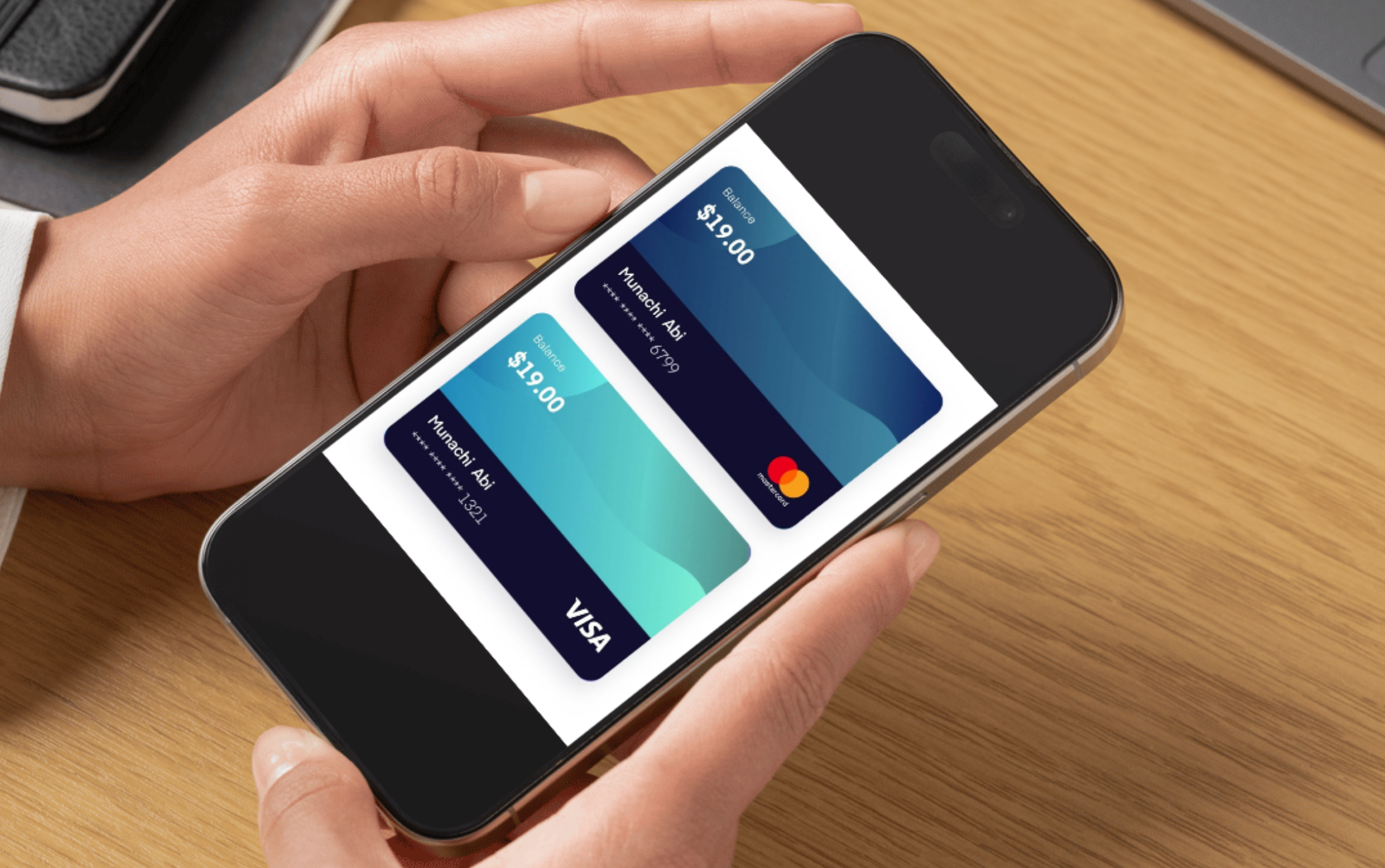
While the core technology of virtual cards is inherently secure, their true power lies in how you use them. By adopting a few key best practices, you can transform them from a simple payment method into an impenetrable digital shield.
1. Use Strong Authentication On Your Virtual Card Account
Your virtual card provider account is the control center for all of your digital payments. It's the one place where your real credit card is linked, and from where all your virtual card numbers are generated. Therefore, securing this account is your first line of defense.
Always enable two-factor authentication (2FA) and use a strong, unique password, preferably managed by a password manager. This ensures that even if a cybercriminal gets hold of your login credentials, they cannot access or generate new cards without a second layer of verification from your device.
2. Monitor Transactions With Real-Time Alerts
Most virtual card services offer real-time alerts for every transaction. This feature is not just a convenience; it's a critical security tool. By receiving instant notifications on your phone, you can immediately spot any suspicious or unauthorized activity. If a compromised virtual card is used for a fraudulent purchase, you’ll know instantly and can deactivate it with a single tap, long before any potential damage is done to your primary account.
3. Set Conservative, Transaction-Specific Limits
One of the most powerful features of virtual cards is the ability to set a specific spending limit. For one-time purchases, create a card with a limit that is slightly above the total cost, plus a small buffer for taxes or shipping. For subscriptions, set the limit to the exact monthly fee. This conservative approach acts as a failsafe, guaranteeing that even if a hacker gets a hold of a card number, they cannot spend more than the pre-set limit. It’s a simple, proactive step that gives you total control over your financial exposure.
4. Create Merchant-Specific Cards
To maximize security and ease of management, create a unique virtual card for each online retailer or service you use. For example, have a specific card named “Netflix,” another for “Amazon,” and a third for an obscure online store you don't trust. The benefit here is twofold: if a card is compromised, you instantly know which merchant is the source of the breach. You can then deactivate that single card without having to cancel your entire payment method, saving you the hassle of updating your card on dozens of other sites.
5. Maintain Strong Digital Hygiene On All Devices
Virtual cards are a powerful tool, but they are not a substitute for overall digital hygiene. Ensure that all devices used for virtual card management, your phone, laptop, and tablet, have up-to-date security software, including antivirus and antimalware protection. Be cautious of public Wi-Fi networks, and always make sure you're on a secure, encrypted connection (indicated by "https" in the URL) when entering any sensitive information.
A Global Shift: The Explosive Growth Of Virtual Cards
The virtual card market is experiencing explosive growth, with tokenized payment transactions, the technology that powers them, projected to exceed $1 trillion globally by 2026. This rapid adoption is not just a trend; it's a global paradigm shift driven by a shared need for greater security and control in an increasingly digital world.
This growth is being fueled by two key forces: consumer demand and business necessity. For consumers, the peace of mind offered by virtual cards is a powerful selling point. As data breaches become more frequent, people are actively seeking tools that empower them to protect their financial data and reduce the anxiety of online shopping.
For businesses, the adoption of virtual cards is a strategic decision. These cards significantly reduce the risk of fraud and chargebacks, which are a major financial drain on online merchants. By encouraging the use of secure, tokenized payments, businesses can create a more trustworthy and resilient payment ecosystem.
Ultimately, virtual cards represent the future of digital payments. They offer consumers and businesses the ability to transact online with confidence, creating a safer and more controlled financial landscape that traditional payment methods simply cannot match. As online commerce continues to expand into every aspect of our lives, virtual cards are proving to be an essential security layer for the modern digital economy.
FAQs About Virtual Cards And Online Security
Are Virtual Cards As Secure As A Physical Credit Card?
They are significantly more secure for online transactions. A physical card's number is a static, permanent key to your account. A virtual card's number is a disposable proxy, meaning if it is compromised, your real card information remains safe.
Do I Need A Separate Bank Account To Use Virtual Cards?
No. Virtual cards are linked to your existing credit card or checking account. When you purchase with a virtual card, the charge is simply debited from your primary account, just as it would be with a physical card.
Can Virtual Cards Be Used For In-person Shopping?
Generally, no. Virtual cards are designed specifically for online, card-not-present transactions. For in-person payments, technologies like Apple Pay and Google Pay, which use a form of tokenization, offer a similar level of security.
How Do Virtual Cards Affect My Credit Score?
They have no impact on your credit score. Since virtual cards are simply a tool to facilitate payments from an existing credit account, they do not affect your credit report or history.
What Happens If I Need A Refund On A Virtual Card?
Refunds are processed just as they would be with a physical card. The refund is credited back to the virtual card number and is then transferred back to your linked credit card or bank account.
Are There Any Fees Associated With Using A Virtual Card?
Most virtual card services offered by major banks and fintech companies are free to use. They are offered as a benefit of being a customer. It's always best to check with your specific provider for any potential fees.
Can I Use A Virtual Card For Recurring Subscriptions?
Yes, and it's one of the best use cases. You can create a virtual card with a specific monthly spending limit and a merchant lock for a service like Netflix or a gym membership, giving you total control and preventing unexpected charges.
What Are The Biggest Limitations Of Virtual Cards?
The biggest limitations are that they can’t be used for in-person purchases, and they are not a substitute for practicing other good cybersecurity habits, such as using strong, unique passwords and being wary of phishing scams.
Final Thoughts
The threat of online fraud is not going away, but you no longer have to feel like a helpless bystander. Virtual cards represent a powerful evolution in personal finance, transforming your ability to protect yourself in the digital world.
By giving you a disposable shield, a merchant-locked guard, and granular control over your spending, they turn a reactive, fear-based approach to security into a proactive, empowered one.
Adopting virtual cards is one of the single most effective steps you can take to protect yourself from online fraud. It's a simple change that can save you countless hours of stress and provide you with a new sense of confidence every time you hit "checkout."
You Might Like: Digital Simplicity In The Highlands